
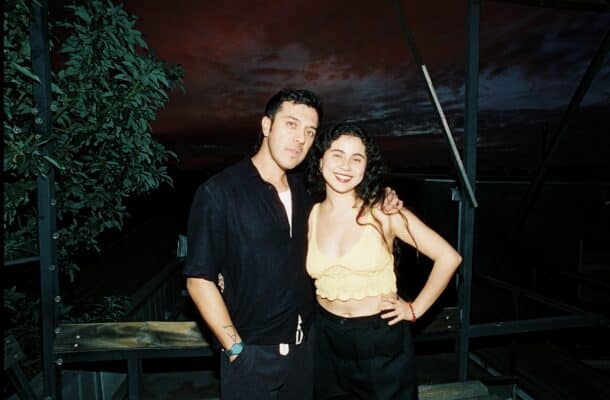
In Conversation with GEPE on the Songs That Waited Twenty Years to Be Heard Again
A couple of chords from “Hablar De Ti (…)” are enough to recognize GEPE’s remarkable talent and his ability to channel emotion through songs that accumulate like the pages of a personal diary. Stories that seem to emerge from deeply personal experiences eventually find a place in anyone’s memory, compositions that evolve, mature over time, and now come back to life through an entirely new perspective.
That idea serves as the foundation for the upcoming album by the Chilean singer-songwriter. The project reimagines some of the most significant songs from his catalog alongside artists including Silvana Estrada in “Hablar De Ti (…),” Daniela Spalla, Daniel, Me Estás Matando, Macario Martínez, Alex Ferreira, and Jósean Log.
The concept emerged after GEPE completed the demanding creative cycle behind “UNDESASTRE,” an album that absorbed nearly four years of his life. Looking back, he realized he no longer had just a handful of records, but a body of work spanning nearly two decades, enough to wonder what would happen if those songs were recorded again “as if it were the very first time.” That question became an exercise in rediscovery.
With a career that has established him as one of the most influential voices in Latin American popular music, including ten studio albums, a Latin Grammy nomination, and performances on stages such as the Viña del Mar International Song Festival, GEPE continues to prove that evolution also means finding new ways to tell the same story.
Revisiting old songs is rarely an exercise in nostalgia. For GEPE, it became a way of measuring time, discovering new meanings in familiar lyrics, and allowing other voices to reshape music that once belonged only to him. Those ideas became the thread running through our conversation.
In recent months, you’ve been revisiting some of the most iconic songs from your catalog through entirely new interpretations. What made this the right moment to look back at these songs instead of focusing entirely on new material?
I spent nearly four years working on my last album, “UNDESASTRE,” so I was completely immersed in new songs for a very long time. It was an incredibly intense process, both emotionally and practically. I have a deep affection for that record, but just like its title suggests, it was a real disaster—in the best sense. It was chaotic, demanding, and all-consuming, so I completely lost sight of my earlier catalog because all my attention was focused on that project. Once “UNDESASTRE” was finished, it felt very natural to look back at everything I had done up to that point. And it wasn’t a small body of work anymore—it was already nine albums. I started revisiting those songs, finding tracks we hadn’t played in years, like “Los Barcos,” alongside others that have never left our live set, like “Invierno” and “Hablar de Ti.”
At first, I thought, “What if I just made a greatest hits album?” But then I became much more interested in asking myself a different question: “What happens if I put these songs to the test of time? Did they still have something new to say? Could they be recorded again as if it were the very first time?” Together with Miguel Molina, who’s become my right and left hand at this point in my career, we began exploring them from that perspective. In the end, I felt these were the songs that truly deserved the chance to come to life again through a project like this.
What surprised you the most about hearing them reinterpreted through a new musical lens?
What surprised me the most was that, when we started recording them, they genuinely felt like I was experiencing them for the first time. It wasn’t something I had to think about; it just happened naturally. The collaborations played a huge role in that as well, because each artist brought a completely different perspective to the songs, making that feeling of rediscovering them even stronger.
“HABLAR DE TI (…)” is centered on admiration, affection, and finding beauty in everyday details. How has your understanding of those emotions changed since you first wrote it?
For me, “HABLAR DE TI (…)” is the kind of song that makes it feel as though time doesn’t exist. When I wrote it, it was dedicated to a very specific person, but over the years that feeling has transcended that moment and continues to resonate with me today. On one level, it still carries that deeply personal meaning, but at the same time it speaks to something much more universal: the profound admiration we can feel for another person. What fascinates me is that “HABLAR DE TI (…)” still carries the same emotional weight for me and for the people who listen to it that it did when I first wrote it. Even though it uses an almost poetic language, at its core it’s about something very simple and deeply human: the urge to put into words, or into melodies, the admiration we feel for someone.
What made Silvana Estrada the ideal artist to share “HABLAR DE TI (…)” with, and what did her interpretation bring to the song that you had not explored before?
I have a deep admiration for Silvana for many reasons, but above all because I think her approach as an interpreter is remarkably nuanced, in the best possible sense of the word, and that’s exactly what I wanted to bring into this song. My way of singing tends to simplify melodies, whereas she does the opposite—she adds layers of complexity. I felt that contrast could create something really special, and she does it with a truly unmatched mastery.
I’d wanted to collaborate with her for a long time, regardless of the song. But “HABLAR DE TI (…)” came about very naturally because it was one of her favorite songs from my catalog, and she immediately connected with it. I called her, shared the idea, and she became fully involved in every aspect of the project. She contributed to the recording, helped shape the musical arrangement, and even influenced the visual concept. In fact, the aesthetic direction for the single artwork came from her. She poured herself into every detail in a way that only Silvana Estrada could.
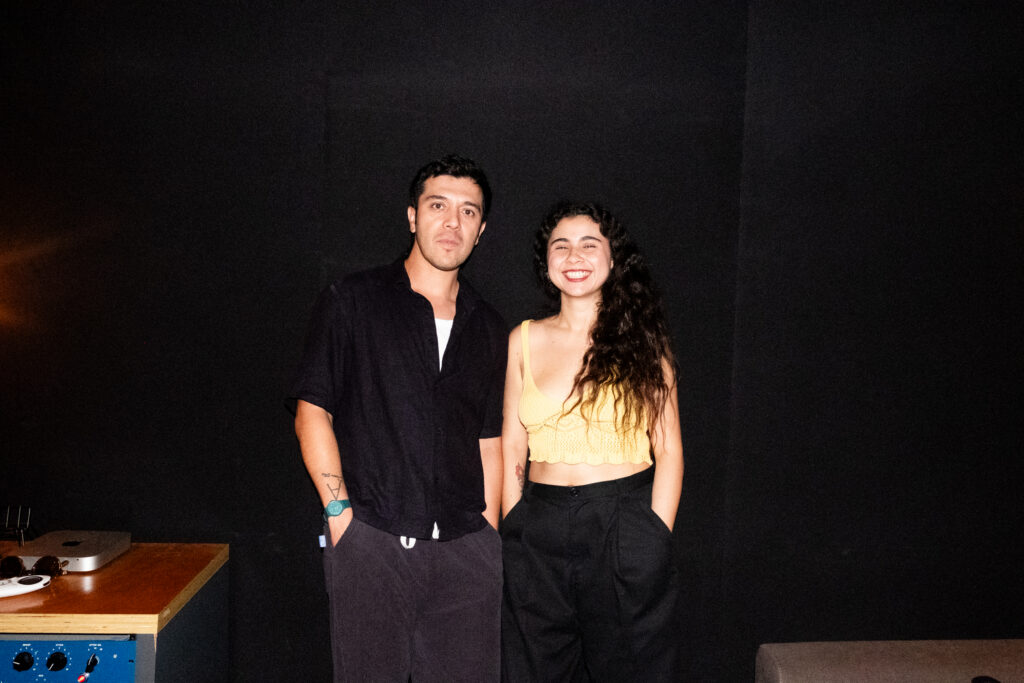
Every guest on this project seems carefully matched to a specific song. What qualities were you looking for when choosing collaborators like Silvana Estrada, Daniela Spalla, Macario Martínez, and Daniel, Me Estás Matando?
What drew me to Silvana was completely different from what drew me to Daniela, Macario, or Daniel, Me Estás Matando—each collaboration had its own very specific reason for happening. What they all have in common, though, is that it was really the songs themselves that led me to each artist. Every song was intrinsically connected to the person who ultimately ended up performing it with me.
The arrangements throughout this project feel more intimate and organic than some of the original recordings. How did working with producer Julián Bernal help shape that overall sound?
I had a wonderful experience working with Julián on “UNDESASTRE,” and we connected really well from the very beginning. He has a very particular temperament, and for someone like me, who tends to be pretty anxious, that was incredibly important. It was refreshing to work with someone who approaches things with such calmness and perspective, especially on a project like this, which involved revisiting my earlier work.
On top of that, Julián is a true master of instrumentation. If a song needed a bass line, a keyboard part, or any other musical element, he would simply step in and do it. It was one of those collaborations where everyone wins. No matter how you look at it, it was a win-win.
When revisiting your catalog, did you find lyrics or emotions that resonate differently with you today?
Yes! Especially with “Los Barcos,” which is one of the oldest songs in my catalog, written more than twenty years ago. You change a lot over that amount of time, and the way you see life changes too. Today, I’m not entirely sure what I was trying to say when I wrote it. In a way, those words have traveled with me for twenty years, and now I find myself deciphering them and discovering new meanings in them. With the other songs I’ve revisited, I have a much clearer understanding of where they came from. But with “Los Barcos,” it became a really beautiful exercise in trying to remember, or even reinterpret, the image of the boats. It was a very different experience from the one I had with the rest of the songs.
Your music has always balanced pop with Latin American folk traditions. Looking back across your career, what musical elements have remained constant, even as your sound has evolved?
Maybe it’s because I’m a Libra, but I feel like things have stayed the same while also changing tremendously. I have the sense that I’ve always been the same person, even though, in a way, I’ve also been many different artists. And somehow, I can still find something in common among all those different versions of myself.
I wouldn’t say I’ve become a different person. Rather, I think I’ve always been the same person trying to make the best record I possibly can. Every album has its own identity and its own songs, but they all come from the same place: the desire to make the best music I can. For me, musical evolution is about refining what you already have. It’s about continuing to grow and improve, not simply changing for the sake of change.
The album brings together artists from different corners of Latin America. Was it important for you that the project also reflected the musical community you’ve built across the region over the years?
Absolutely. Collaboration is essential to me. I think the Latin American indie, alternative, and pop scene becomes richer when artists come together and collaborate. Since my third album, I’ve almost always worked with other artists. In fact, when I don’t, I feel a little lonely. I love collaborating, whether it’s contributing to someone else’s project or inviting other artists to be part of mine.
What do you hope longtime listeners and people discovering your music for the first time take away from this project?
I always think about the person who’s going to hear my music for the very first time. It’s something I’m constantly aware of because I think it’s completely natural that there are still people who don’t know my work. Tomorrow, someone might discover one of my songs for the very first time, and I believe you always have to be ready for that.
With that in mind, I think this project can be a wonderful entry point. If these songs are strong enough, I hope someone discovering my music for the first time will find one of the best versions of me as an artist here. I’ve always felt that my most recent record is the best thing I’ve ever made, and I feel exactly the same way now. This project represents the very best I’ve been able to create up to this point.