
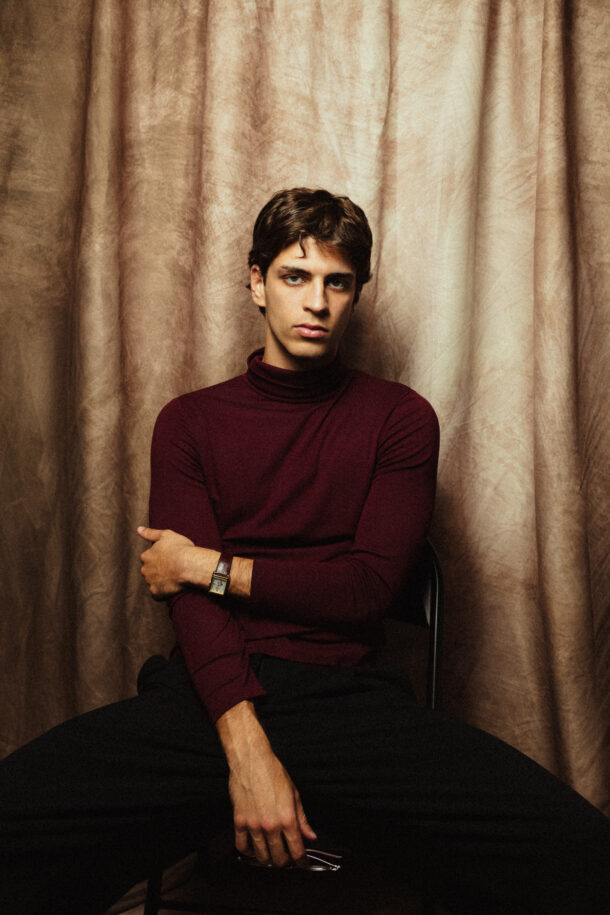
Kova Parker Interview: Making “Una Cara Más”
Before fully defining the creative direction of “Una Cara Más,” Kova Parker spent many hours alone in the studio, sitting in the dark and watching concerts and videos by producers he admired. He wanted to understand why that music excited him. When he compared those references with his own work, he realized that he had been creating with the industry and the market in mind rather than following what genuinely excited him.
Created over more than a year, “Una Cara Más” took shape during long stretches of working alone. Parker began writing by himself and brought in producers once a song was mostly finished, allowing him to develop each idea without someone immediately telling him what genre it belonged to, who the audience was, or whether it worked. He also deliberately limited how much music he listened to, wary that consuming too many outside influences could make it easier for him to start sounding like the artists he was hearing.
The resulting album does not settle into a single category. Its alternative pop sound moves toward more experimental territory on songs such as “Un Día Normal,” while “Go Boy,” “Obsesivo Compulsivo,” and “GIOIA” help define its emotional world. Personal feelings provide the starting point, but Parker often exaggerates the stories around them, turning ambition, romantic frustration, grief, and obsession into something larger and occasionally strange. Beneath it all is the hunger of a young artist who wants to prove himself while admitting that he has not yet become everything he hopes to be. “Una Cara Más” captures the moment Parker stopped trying to anticipate what others wanted and began trusting his own taste instead.
Kova, “Una Cara Más” marks your debut album and introduces a project that avoids easy categorization. Looking back at the process of creating this record, how did you arrive at this artistic identity, and what does this moment represent for you as an artist?
I’ve thought a lot about how I arrived at this moment of understanding what I actually wanted to make.
I remember there were moments where I would arrive at the studio, sit down in the darkness, and just start watching videos—either of really big producers that I liked or concerts that I loved. And I started trying to understand why I liked what I liked.
Then I started looking at the music I was making at the time, and I realized that it had almost nothing to do with what I actually liked. It felt like I was just trying to make something that worked for the industry or for the market I was in.
It took a while, but eventually I started trying to understand what I was doing in the moments when I made something and genuinely loved it. It’s hard to explain what that feeling is, but once you understand what you like, it becomes much easier to understand what you don’t like.
So this album represents something I think I’ll be able to look back at years from now and still be very proud of, no matter how much time passes.
Because I know I made something that, if I were the audience, would make me say exactly what I would want somebody to say about me as an artist:
“I definitely haven’t heard this before, and I like whatever I’m feeling.”
You are a Puerto Rican artist building your own vision of alternative pop. What experiences, concerns, or stages of your life were essential in helping you decide that music would be the space through which you wanted to express yourself?
I honestly have no idea exactly how I reached this point. I’ve always been very emotional, and I’ve always felt a lot. I’ve also always been someone who feels a lot for other people. When I was little, whenever I heard a song that was somehow explaining something I was feeling, I felt incredibly connected to somebody who didn’t even know me.
And I think what felt so incredible about that was that I felt understood by somebody who couldn’t judge me because they didn’t know me.
For some reason, eventually I started feeling like I wanted to make other people feel that as well. And honestly, I wanted to make myself feel that with my own songs too.
I started wanting to hear certain types of songs that I couldn’t really find. So at some point I basically thought, maybe I could make them. I think more or less that’s how I got here.
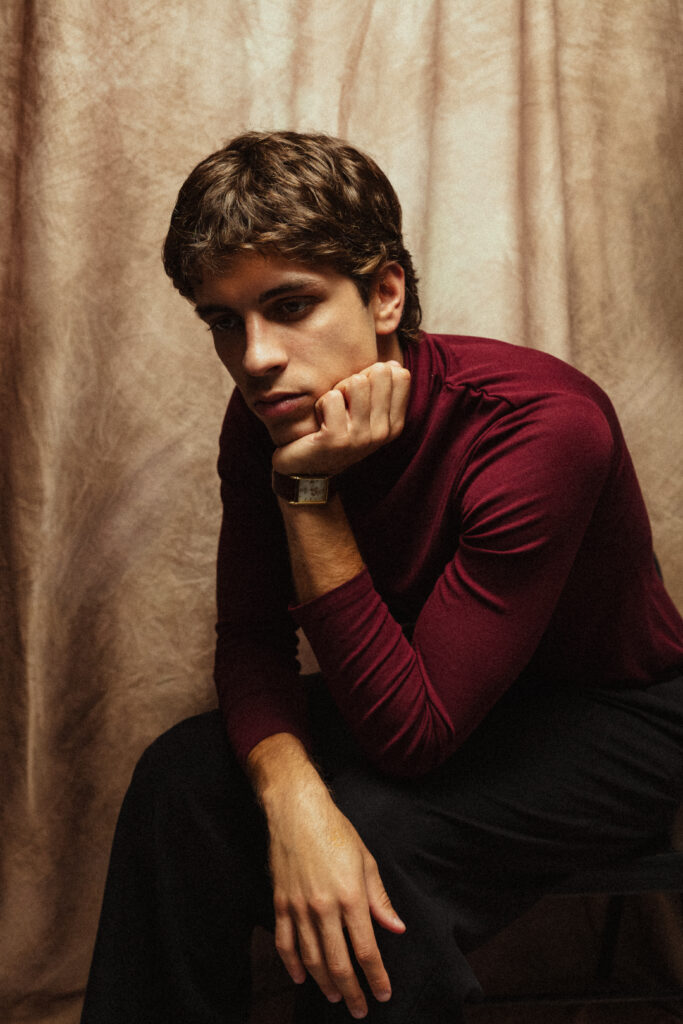
“Una Cara Más” was born from the music you wanted to hear yourself. At what point did you realize that this should become the central idea behind the album?
I think I realized it during all those moments where I would get into the car and not really know what I wanted to listen to. I would be somewhere wanting to hear something, and I was just getting tired of hearing a lot of repetitive stuff.
I wanted to replicate feelings that I had felt before while listening to different songs, but I wanted to do it in my own way. And I think eventually that became the idea: instead of trying to figure out what people wanted to hear, I would try to make what I wanted to hear and couldn’t really find.
During the creative process, you decided to stop listening to music for a while to prevent other references from influencing your sound too much. What was that “musical diet” like, and what did you discover about your own instincts as an artist?
I think that the musical diet never really stopped, to be honest. I barely listen to music.
And there’s actually something about me that I don’t love admitting: there are artists that I really like, and sometimes I’m almost scared of listening to their new albums just in case I love them too much. It’s a weird thing.
If I could give an analogy, I love desserts, so imagine that I want to make a chocolate cake, but right next door there’s this place that makes an incredible chocolate cake. In my mind I’m like, “Why don’t I just eat that chocolate cake instead of making mine?”
And if I go next door, eat their cake, and absolutely love it, maybe I’ll never know what mine would’ve tasted like because I chose somebody else’s chocolate cake instead. Even though I’m sure I would love theirs, I prefer knowing what I’m able to make. I think that’s probably the easiest way I can explain it.
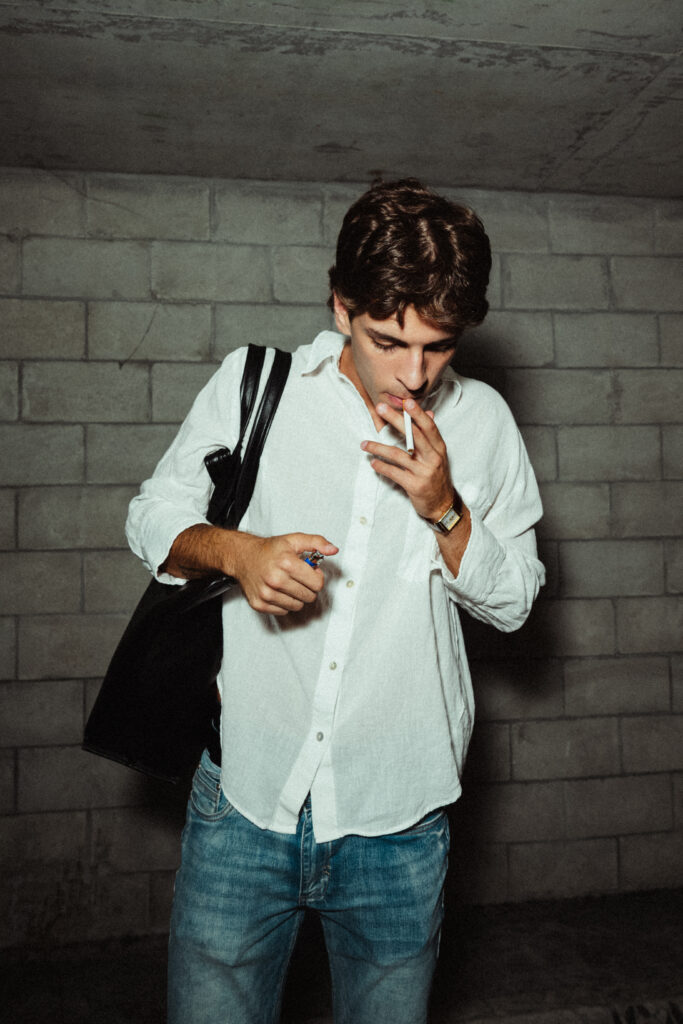
You have explained that you did not create the album with playlists, genres, or categories in mind. So how would you describe it conceptually?
I think there’s a feeling that maybe people don’t talk about that much in the industry, even though obviously some people do.
It’s this feeling of being young and wanting to prove yourself—not only to yourself, but also to the person you love, to the people who doubted you, to people who maybe aren’t with you anymore.
When you’re young, I think you really want to be able to turn around and say, “You see? I’m making it. I’m doing this. I told you I was going to be great.”
And sometimes it’s even directed at somebody who you feel doesn’t love you anymore. There’s almost this feeling of, “You see? I deserve better. Look what I became.” A lot of the album came from that perspective.
But I also wanted to admit the weaker and more vulnerable side of it instead of putting this face out there that says, “Well, I’m great. Period.” It’s also admitting, “I’m trying to be great. I’m not great yet.” If you listen to a lot of the songs, there are lyrics about trying to make money or trying to become the rich kid so that she finally fucking loves me. That’s probably the conceptual world of Una Cara Más.
How difficult was it to maintain that musical freedom in an industry that often asks artists to define their sound and audience very quickly?
It honestly wasn’t really that hard once I was able to sit in a studio alone for months. I think that’s both a good thing and a bad thing.
I’ve become an artist who is almost only able to make songs by myself first, and then I sit down with producers once the song is mostly done.
But spending so much time with myself—just a lot of time alone, closed inside a studio—really helped me. I don’t know if that would help everybody, but it helped me.
When you’re alone, there’s nobody in the room immediately telling you what something should be, what audience it belongs to, what genre it is, or whether it works. So maintaining that freedom while I was alone was actually quite easy.
You worked with European and American producers who did not speak Spanish, and the phrase “we speak music” became part of the process. How did you communicate feelings, atmospheres, and intentions without relying entirely on language?
That was actually such a difficult part of the process sometimes. We would have a lot of back-and-forth where I would say something like, “We need it to feel more nostalgic,” and they would ask me, “What does nostalgic mean?” And that’s a very fair question.
What does “nostalgic” actually mean to you? Does it mean a certain instrument? Does it mean something needs to sound older? Does it mean a melody? A texture? So there was a lot of back-and-forth trying to explain those feelings.
A lot of the time it basically came down to me vocalizing the beats and sounds that I heard in my head. Instead of only describing the feeling, I would literally vocalize what I thought the beat should sound like, and then they would translate that into the production—and obviously make it even better because they were extremely talented. So in a lot of cases, instead of speaking about music, we literally had to speak music.
How much of this album comes from personal experiences, and how much was built through fiction?
I would say that a lot of the feelings come from personal experiences, but most of the actual stories are dramatized and exaggerated. Sometimes exaggerated a lot.
That’s kind of how I like creating. Something real gives me the emotion, and then once I start writing, I can build a world around that emotion and take it wherever I want.
Let’s talk about the focus track, “GIOIA.” The song transforms a personal memory connected to your grandmother into a story about obsession, grief, and denial. What did you want to explore through that contrast between something deeply personal and something almost absurd?
“GIOIA” comes from a very deep place for me. It’s a weird song because in a way it can almost feel happy, but at the same time it’s kind of crazy. And that’s definitely somewhere where I exaggerated reality a lot.
There is something that actually happened, though. I had a fish, and I named it after a girlfriend I had for a little bit.
I think it came from one of those really emotional, sad moments where your mind somehow thinks, “Maybe if I name this fish after her, she’ll feel a little bit closer to me.”
And even in that moment I remember thinking, “Am I crazy for this?”
But I thought that was such an interesting moment.
I never planned for it to become part of a song. But while I was making “GIOIA,” I suddenly remembered it and thought, “Maybe I could talk about this.”
And I liked that. It’s cool to be able to experience something in your actual life and then later look at that moment through this artistic lens and turn it into something completely different.
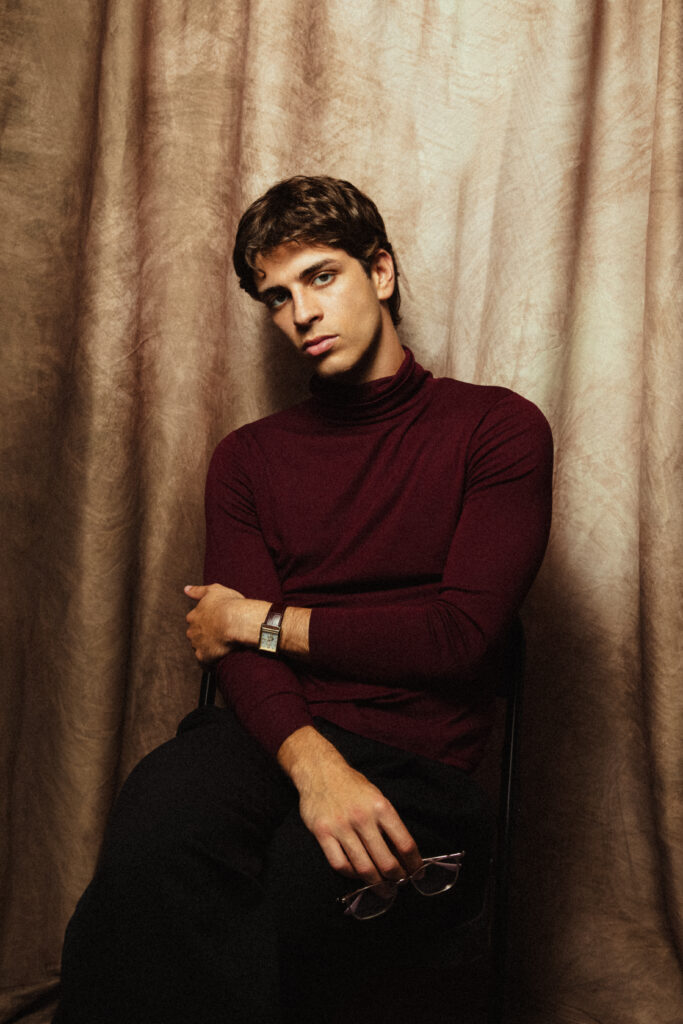
You mentioned taking a step back from listening to too much music while creating “Una Cara Más” so you could focus on your own instincts. Now that the album is out, what’s on your current playlist, and which song are you especially obsessed with right now?
I’m honestly not obsessed with any song right now. And I barely listen to Una Cara Más either. Like I’ve said before, the relationship I have with the album now is almost like an old best friend.
You don’t really talk to that best friend anymore, but when you do, it feels like nothing really changed. You still have great conversations.
You went through a part of life together. You were best friends. You experienced everything together and loved it, but eventually you drifted because you’re now in completely different phases of your lives.
That’s kind of how I feel about this album. I’m working on a new project now, so once in a while I’ll go back and listen to Una Cara Más, but I don’t really have an active relationship with it right now.
I’m very focused on what comes next. But I did have a relationship with this album for more than a year while I was making it, so I hope people listening to it now can have their own relationship with it for a while too.
If you had to highlight three songs from “Una Cara Más” that best represent the world you created with this album, which ones would you choose and why?
I would probably say “Go Boy,” “Obsesivo Compulsivo,” and “GIOIA.” I feel like those three songs together can show you a little bit of what the album is trying to say and what the world feels like.
But if you let me cheat and add a fourth, I would definitely add “Un Día Normal.” I think that song is a big staple of the more alternative and experimental side of the album, so I have a hard time leaving it out.
You have mentioned that the world of “Una Cara Más” opens the door to a future album that will be more visual, cinematic, and daring. Which elements from this first stage would you like to develop further, and where would you like to take the story of Kova Parker next?
My goal is to create beautiful art. I don’t want to only make songs that people want to listen to. I want to make a world that people can associate with different moments of their lives.
I don’t really want to talk too much about my next projects because I want the art to speak for itself. But I am going to make sure that every project I do breaks my own barriers and that I’m giving the absolute best that I can—visually, musically, conceptually, everything.
If there’s one thing I’ve learned in life, it’s that I never want to regret not working harder on something. Because time passes, and once it passes, you never want to look back and feel like you could’ve done a little bit better or given a little bit more.
I use that idea a lot to make myself work every day. I don’t want to regret not working enough. And I definitely don’t want to regret not making better art.